
Seems Like the Silver Lining in the War with Iran is Occurring

Back on Earth Day in late April, a number of weeks ago, I started to write this column
In it I wrote:
“To set the stage, in 2025 clean energy took off. It was the first time in 100 years that 34% of all electricity was from renewables, beating coal at 33%. In addition, solar was up from 2024 by 30% and renewables met 99% of the increase in global demand. Those of you that follow these things know that wind and solar cost less per kwh that all fossil fuels. The price drops over the last 20 years has made clean energy cheaper than fossil fuels.
Now, with Trump’s War with Iran, there are early and preliminary signs that this war is triggering an acceleration to get off of fossil fuels and in particular petroleum. China has come to lead in solar generation globally. In February, China exported some 34 GW [Giga Watts] capacity to the world. In March, the month after Trump started the war, China exported 68 GW, double the prior month before the war. This amount is 49% larger than their export record from August 2025.
While it is too soon to track March and April sales of EVs globally, there is some reporting in. In the EU some 224,000 EVs were sold in March. This is up 51% from February. In the EU this means that 22% of all new cars sold were EVs, probably a record.”
Well, there is some new data available since I wrote the above words:
EU passenger car registrations rose 5.1% in April to 972,314 units, marking the third consecutive month of growth after a sluggish start to the year. The broader European market, including the UK and EFTA countries, grew 7% to 1,152,315 vehicles. Year-to-date, the EU market expanded 4.2% to reach nearly 3.8 million vehicles.
Germany remained Europe’s largest market, with Italy and the UK posting faster growth rates. The UK market expanded by 24% in April, though against a weak comparison period a year earlier. France was a relative weak spot, with registrations essential
And
Soaring fuel prices triggered by the war in Iran are pushing panicked consumers across Asia toward rooftop solar power, with installations surging in markets like the Philippines as households seek shelter from volatile energy costs.
The closure of the Strait of Hormuz — through which roughly 20% of the world’s oil and liquefied natural gas typically flows — has upended energy markets across the region. Oil imports to Asia, which accounts for 85% of crude shipments from the Gulf, fell 30% year-on-year in April, hitting their lowest level since October 2015, according to Reuters. The Associated Press reported that anxious consumers in hard-hit Asian countries are now turning to rooftop solar as electricity and fuel bills climb.
In the Philippines, which depends heavily on imported fossil fuels, the pressure is acute. The country’s Department of Energy accelerated the grid entry of 1.28 GW of solar projects earlier this year, while the broader solar market is projected to grow from 4.25 GW in 2025 to 5.43 GW in 2026. At the regional level, importing oil and gas at current prices is adding $3.36 billion per month to ASEAN’s import bill, according to the World Economic Forum.
Even in Africa, the sales of EVs has dramatically increased since the beginning of Trump’s war of choice with Iran:
Africa imported 44,358 electric vehicles from China in 2025, more than doubling from 19,386 the previous year, according to data from China’s Commerce Ministry cited in an Associated Press report published on May 8. The shipments were valued at more than $200 million, with Ethiopia accounting for much of the demand after banning new imports of gas and diesel vehicles in 2024.
Ethiopia now has more than 115,000 EVs on its roads, representing about 8% of the national fleet. The figure marks an extraordinary jump from just 7,000 EV registrations in 2022. Last year, more than 60% of all new vehicle registrations in Ethiopia were electric.
The economic case for switching is compelling. “A private EV owner now spends roughly $4 a month on charging compared to about $27 previously spent on fuel,” said Bob Wesonga, lead on policy and investments at the Africa E-Mobility Alliance. Ethiopia’s abundant hydroelectric power — with electricity generated almost entirely from renewable sources — makes charging cheap and the grid relatively clean.
The government has set ambitious industrial targets. Seventeen EV assembly plants are currently operating in the country, with plans to expand that number to 60 by 2030. Ethiopia also aims to have 500,000 EVs on its roads by 2032 and is building a national charging network of 2,300 stations over the next decade.
The transition has gained urgency from the Iran war, which began in late February 2026 and triggered what the International Energy Agency has called the largest supply disruption in the history of the global oil market. The closure of the Strait of Hormuz choked off about 600,000 barrels per day of refined fuel that typically flows to Africa from the Middle East, according to Bloomberg. East and southern Africa, which receive roughly 75% of their fuel imports from the region, have been hit hardest.
Diesel prices in Kenya surged 24% during the conflict, and governments across the continent scrambled for alternative supplies. The crisis has reinforced Ethiopia’s framing of its EV push as a buffer against external shocks.
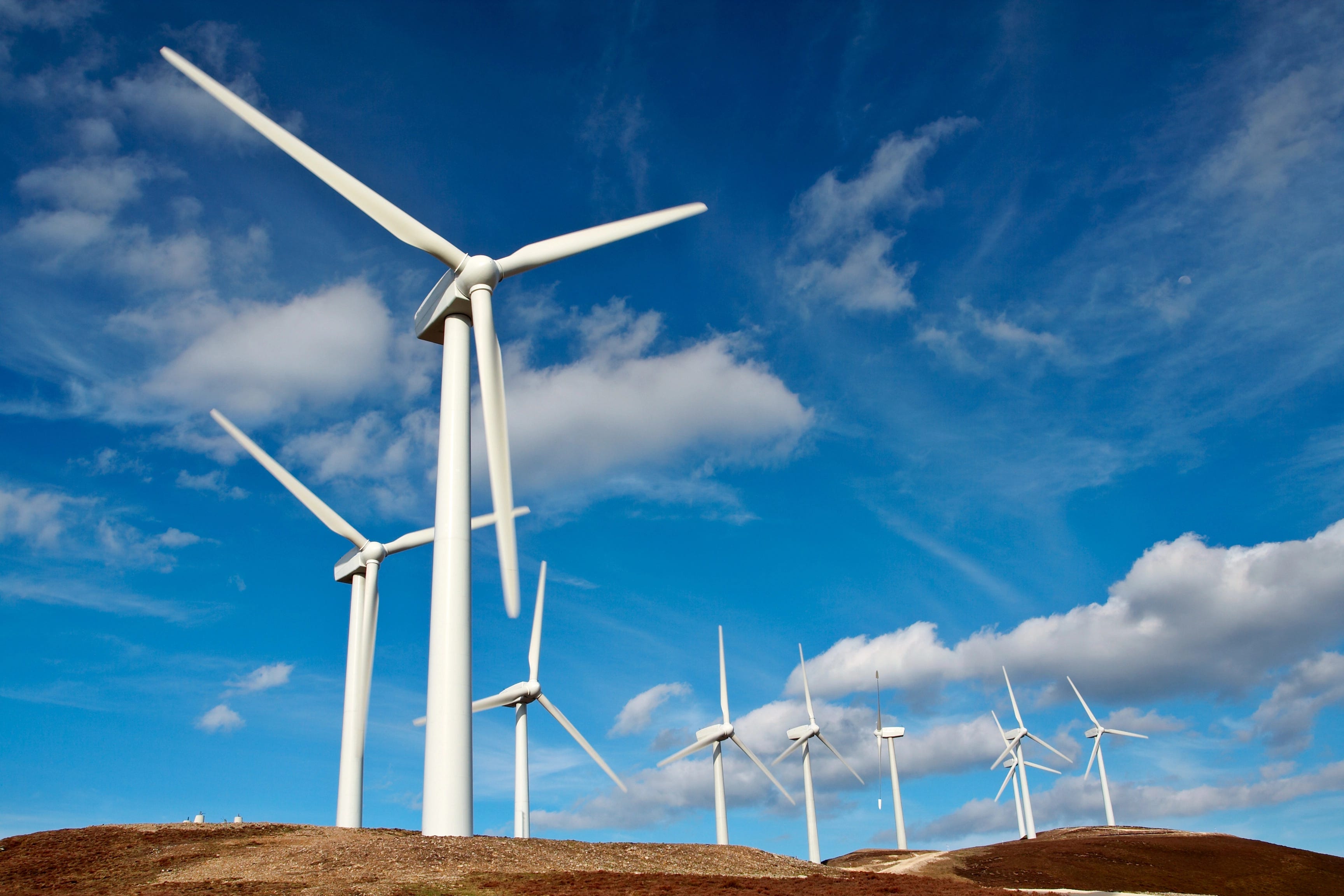
All of this “silver lining” of Trump’s war with Iran comes after 20 years of dramatically declining price of solar and wind power. It was projected 20 years ago that wind and solar would be cheaper than fossil fuels; now they are. Earlier in this century, one of the primary reasons for fossil fuels use was that they were cheaper. No longer. Now with the Iran War the cost of getting the planet to not care about the Strait of Hormuz, the path to a future of clean energy, is wide open.
One way to measure the true cost of an energy source is to use the Levelized Cost of Energy [LCOE] which includes capital, fuel and operating costs of a plant. This is for existing structures, arrays and plants. Using this comparative basis the sources of energy from cheapest to most expensive in creating electricity the cost hierarchy is:
Onshore Wind
Onshore Solar Big PV Array
Offshore Wind
Coal-fired plants
Natural Gas Power
Petroleum-fired Power
[Battery storage is used primarily with Onshore Wind and Solar to create a renewable storage capacity to allow for distributed power as opposed to the ‘grid’ as they exist in countries around the world.]
There are now memes in the global zeitgeist about ‘taxing petroleum’ and ‘windfall profits tax’ for oil companies starting to be talked about
So, the EU, Asia and Africa are all ramping ups EV sales and usage and installing clean, cheap and renewable energy due to the Iran War. Unfortunately, the man – Trump – who created the global petroleum shortage – still says that “climate change is a hoax” and “drill baby drill”. So, the U.S., while responsible for the War, is running in the other direction from the rest of the world.
In the year 2040, the big conversion of renewable energies between now and then will be sourced back to the Iran War of 2026 as the beginning of the end of widespread fossil fuel uses. The U.S. is now in the position to play catch-up to the world.