
Cognitive Dissonance Continues in 2026

When I decided to write several books about the decade of the 2020s, I knew that this decade would be one of massive Cognitive Dissonance and therefore one of the books would be about this.
As paid subscribers know, every year I provide one free eBook that I have written. In 2024 it was “The 2020s: A Decade of Cognitive Dissonance”
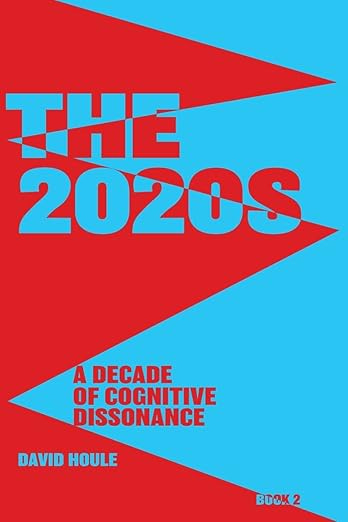
Here are some quotes and text from Chapter One:
“When dissonance is present, in addition to trying to reduce it, the person will actively avoid situations and information which would likely increase the dissonance”. Leon Festinger [the founder of this concept]
“Wisdom is tolerance of cognitive dissonance”. Robert Thurman
“Psychological conflict resulting from incongruous beliefs and attitudes held simultaneously”.Webster’s Dictionary
As I wrote in this first chapter:
“Our experience of dissonance in the 2020s will require
continued management of “reality” fading into the past
simultaneously with new realities showing up with
accelerating frequency. A psychological opening up to
change that forces willingness to accept and then embrace
change.
These definitions from dictionaries and encyclopedias need
to be expanded and recast to the bigger dynamics at play.
In traveling the world giving keynote speeches and
presentations, I have asked audiences to suspend what they
think of as their current reality. I have asked thousands of people to, at least temporarily, suspend what they think
reality is, so they can be open to what I suggest is the future.
While people understand that change is real, they often
have a hard time adapting to it… they assume that it won’t
affect them if they don’t want to change.
It will affect them, and eventually they will be forced to
change….
Reality is never fixed, but most people think that it is. Some
of this is habit. Some of this is assumptive belief that today
will be much like yesterday and that tomorrow will be much
like today. “I will get up, get ready for work, commute to
work, spend a day working and then come back home.
Repeat. The sun always rises and sets. I will wake up in the
same body I went to sleep in….
We then take this familiar repetition and project it into the
future. We do this assuming that what lies ahead is just an
extension of today’s perceived reality… just as today’s is an
extension of yesterdays.
The metaphor here is rowing a boat. We move toward our
destination, but we are facing where we came from, not
where we are going. Every now and then we need to turn
and look to see if we are on course. We are backing into
the future.
In the 2020s, we must turn and face our future.
We can no longer think that past is prologue (except from
the viewpoint of time sequence). The past of the last 20
years brings us here, but it in no way prepares us for our
day-to-day reality of the next decade. Our present will be
disorienting, and our future will be full of disruptions. Our
past is not an accurate indicator of the future we are
accelerating into.
The cognitive dissonance we will feel in the 2020s will be
greater than for any other iteration of humanity. This is a
result of the number and magnitude of the disruptions we
will experience. Later in this book I will cite past eras that
experienced a similar degree of change… but over 50 year
timelines. The ten years of the 2020s will experience at least
as much change (massive, unique and aggregate change) as
any 50-year period in history. We will all have to learn to
adapt and be open to a degree of change and disruption
that no previous iteration of humanity has experienced.
The massive amount of change, the accelerating speed of
change, and the unprecedented simultaneity of global
change in the 2020s is a first-time event. People will become
disoriented as they struggle to adapt. There will be
significant cognitive dissonance for most people as what
their assumed and expected “reality” ceases to exist.”
In this new year of 2026 as I wrote recently we are 60% through the time of the 2020s and that the remaining part of the 2020s – 40% - will have as much disruption and change as the first 60% so the cognitive dissonance will be growing ever greater. There is currently a common phrase – shortened via text to WTF! WTF! Is a response to cognitive dissonance.
Not all change we will perceive is “good”. Some of the things going on globally and in the U.S. are very concerning, but standing in judgement will not help with cognitive dissonance. While you are busy judging, change will be happening and happening to you.
These are clichés and quotes that might help you manage this dissonance:
‘Be the change you want to see in the world”
“Go with the flow”
“Change before you have to”
Thinking is hard, that is why most people judge”
Know that continued disruption is ahead in 2026. Know that the way things are is not the way they used to be. Know that the way you think or want things to be, might not come to pass. Yesterday is a very long way from tomorrow.
Please hit the like button below. Thank you!
Thanks Jack. Yes all three are so important right now.
Cognitive dissonance, critical thinking, and discernment -- three key issues for human development in 2026 and beyond. David Houle had it right in 2020 and he has it right now.